
Due diligence
A compliant payslip is not the same as a compliant organisation.
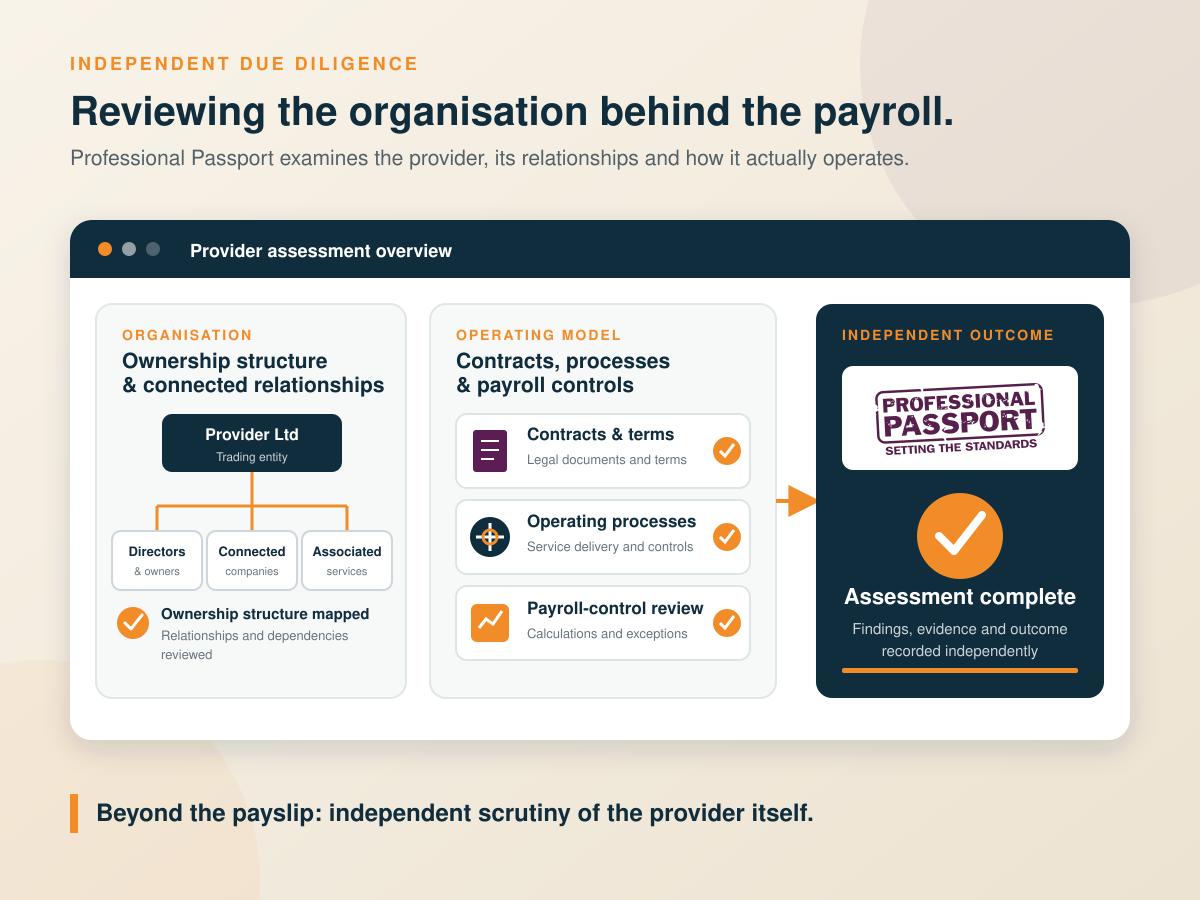
Professional Passport reviews the business behind the payroll: who owns and controls it, how it contracts, how it operates and whether its systems and processes support sustainable compliance.
Scope of review
What the review covers
Ownership and control
Directors, shareholders, persons of significant control and relevant connected-company relationships.
Contracts and employment
Client, agency and worker documentation; employment terms; pay practices; and the allocation of responsibilities across the supply chain.
Operating processes
Onboarding, payroll, payment, reconciliation, complaints, corrections, leavers and the handling of exceptions.
Payroll controls
Gross-to-net calculations, RTI, deductions, holiday pay, automatic enrolment, expenses and salary-sacrifice arrangements.
Financial and tax indicators
Relevant VAT, financial-status and operational-viability information, together with ongoing monitoring and review triggers.
Both, not either
Why due diligence still matters
Direct payment control addresses the central risk of an agency-funded PAYE amount remaining unpaid. Wider due diligence helps identify other conduct or systemic weaknesses that can harm workers, disrupt the supply chain or create separate financial, criminal-finance, tax and governance risks.
Fortis therefore does not ask organisations to choose between due diligence and payment control. It combines them.
Next step
Ready to move from monitoring to control?
See how Fortis validates each payroll, separates the relevant PAYE and NIC liability and gives your organisation the evidence needed to show what was calculated, paid and reconciled.